 C1New
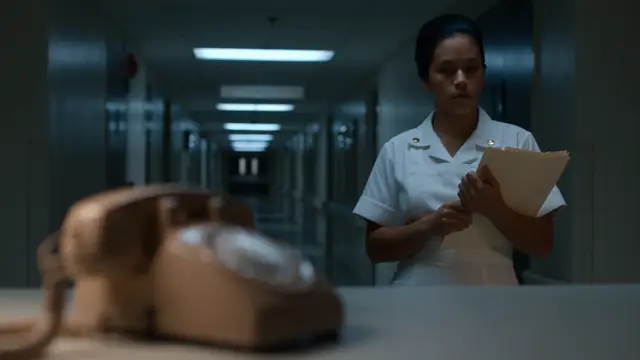
Rack focus
shift attention from object to person (or back); connect a clue to its owner

A slow zoom out gradually widens the lens without moving the camera. What it's for: let the edges of the frame reveal the joke or the truth; the 1970s observational look.
 C2b

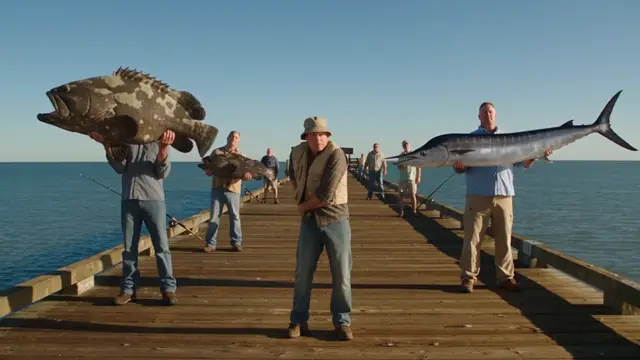
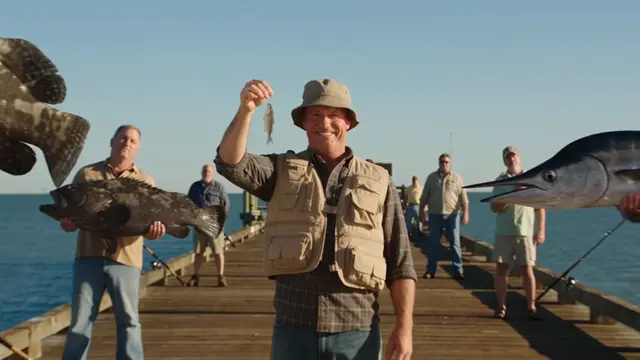
Scene paragraph A sunny morning on a long wooden fishing dock crowded with anglers, photoreal comedy. A middle-aged man with a sunburned face, a bucket hat and a tan fishing vest proudly holds up a tiny silver fish. Other anglers in caps stand along the dock on both sides of him holding up enormous fish. Blue sea and sky, bright sunlight.
The shot opens in a medium close-up of the man and his tiny fish, the camera locked on a tripod while the lens zooms out slowly and evenly from the first second to the last. 0–2s: he beams at the lens. 2–4s: the frame widens around him, the background flat and compressed. 4–6s: the other anglers holding huge fish appear on both sides. 6–8s: the zoom settles wide as his smile fades and he hides his fish behind his back. Throughout: lens zoom only from a fixed camera position, one continuous take.
A slow zoom out lets the joke land at the edges of the frame. Say what appears on both sides.
Other direction: Slow zoom in
Pairs with: Embarrassment
C1Newshift attention from object to person (or back); connect a clue to its owner
 C3New
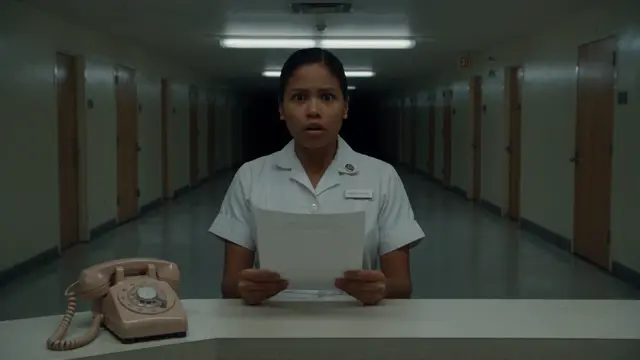
the floor drops out; dread, vertigo, a terrible realization
 C4
shock, a punchline, a stinger; 1970s action grammar